

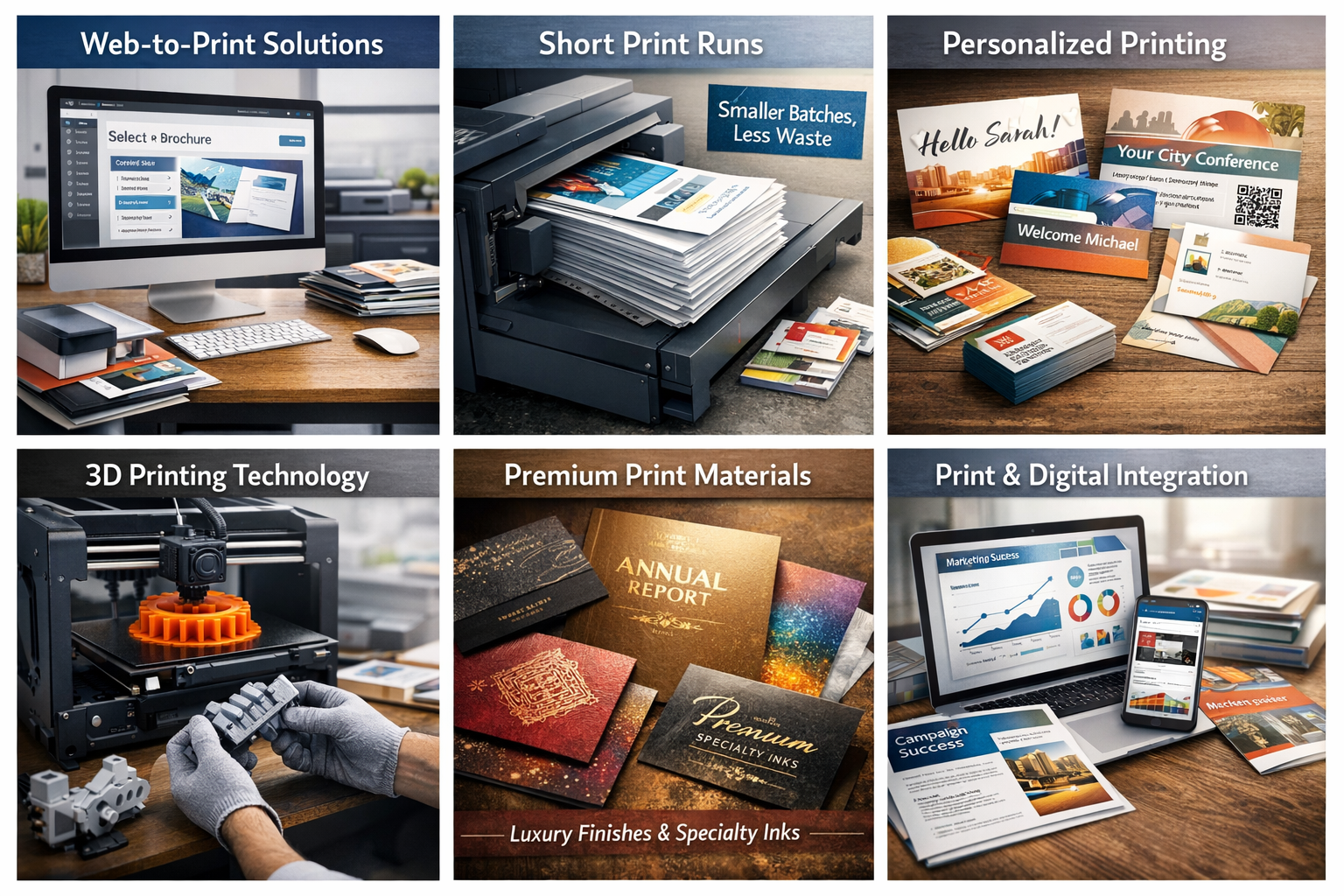
Print Industry Trends in 2026
It’s the digital era, but print is not fading into the background; quite the opposite. Yet the industry has changed significantly in recent years, and 2026 is not expected to be any different. Businesses are thinking more carefully about what they print, why they’re printing it and how it fits into what is now often a digital-first workflow.
The biggest changes are not the flashy, headline-grabbing titles you may see in social media or sensationalised LinkedIn blog posts. No, they’re anchored in the ‘boring’ processes that wouldn’t get the clicks, such as optimising ordering systems or building integrated web-to-print portals. In 2026, it’s about optimisation and flexibility.
Web-to-Print Services
Buyers now demand ease of use and convenience nearly as much as print quality. As a society, we’re no longer patient; as consumers, we are accustomed to single-click ordering and streamlined apps and websites. The conversion rates for websites that make you wait even just a few seconds tend to plummet.
For print companies, web-to-print is something that can no longer be ignored and is quickly becoming a must-have. The ordering process needs to be simple and repeatable, less frustrating and time-consuming, especially for companies with multiple teams or branches.
If you only have the budget for a website, that’s fine, just ensure it’s easy to use and customised based on a plug-and-play e-commerce platform.
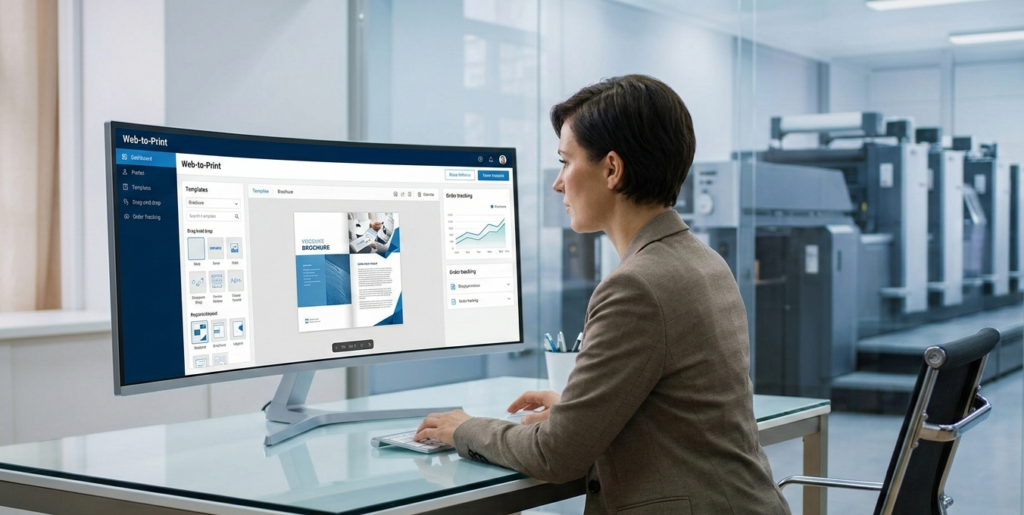
Of course, for some projects, a back-and-forth between client and provider is necessary. This process needs to be seamlessly integrated as part of the website and/or app, making it easy for consumers to follow the ordering process. Responses need to be quick, within a few hours, perhaps even inside a simple chat function
Shorter Runs Make More Sense
Bulk printing used to be common in the industry, but companies tend to prefer a shorter run in 2026. They are becoming more careful with stock levels, warehousing, and waste, which means an adaptive response to requirements is necessary.
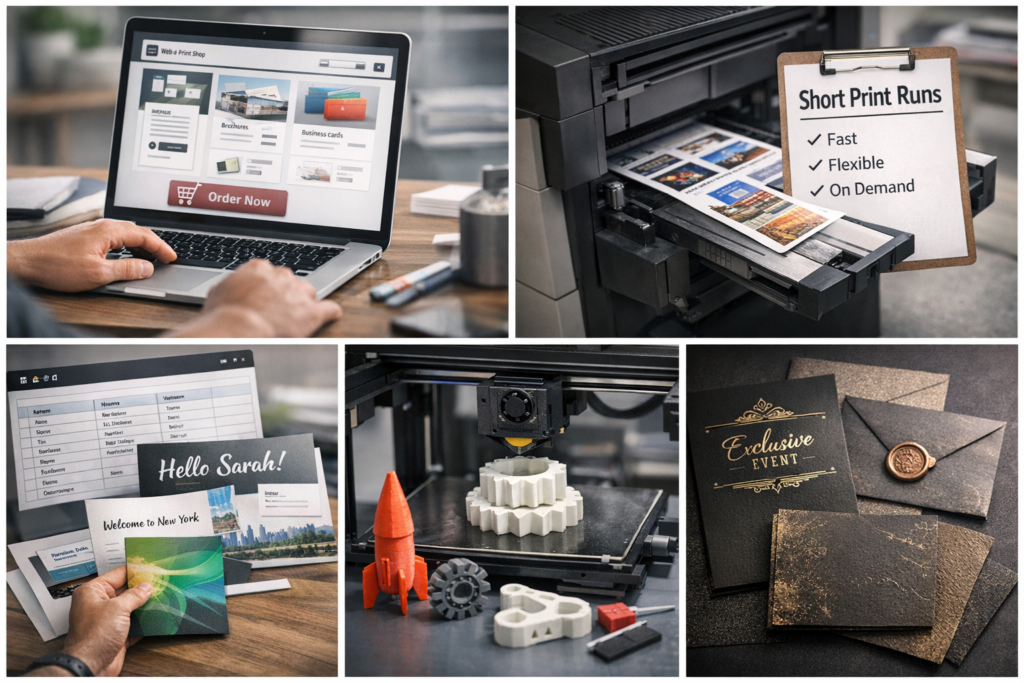
Companies now increasingly want to avoid over-ordering. Having an overflow of brochures, folders, handouts, or signage, especially when each campaign or project requires a new approach, is no longer preferred. Especially when digital alternatives can easily avoid this waste and keep costs even lower.
If you want consumers to still choose print, suppliers need to make it easy to deliver shorter runs. Yes, even if that means the order ends up having higher per-print costs, as it allows companies to order for projects based on need, rather than the old “print more for value” approach.
Personalisation Moves Further Into Business Print
Customers now expect personalisation as a key option for print projects. It is no longer a specialist extra, or an optional add-on, but a key marketing component. In fact, personalisation has now become a core strength of print, keeping the industry relevant and still worth keeping as part of a marketing strategy.
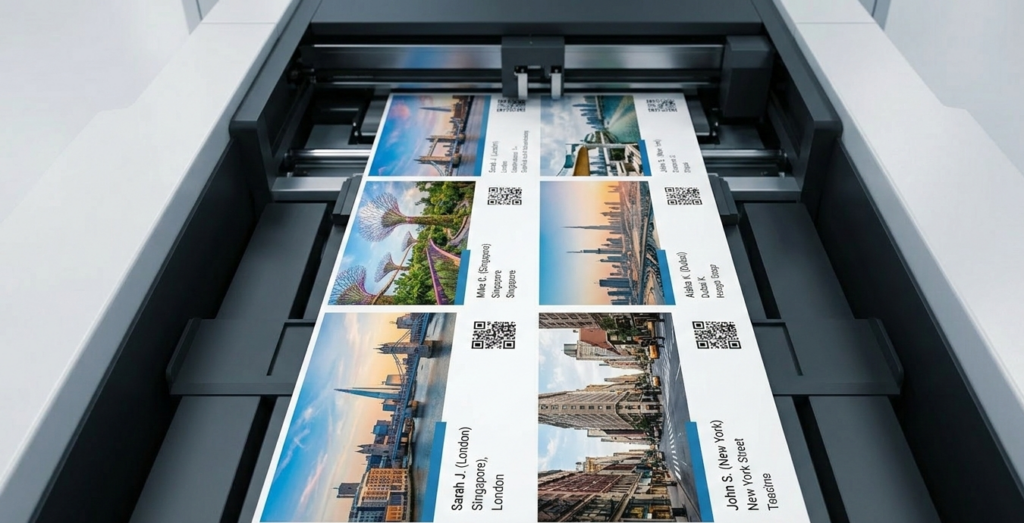
In the print process, variable data printing is becoming more common. It allows for location and audience-specific versions of the same exact asset, such as sales packs, invitations, onboarding materials, and other similar products.
Personalised print improves the results of any marketing campaign, far more successful than generic print runs. Tailored print resources are also becoming more popular with internal teams, such as HR and operations, with the ability to add variation and variable-based changes to print now very much a necessity.
Can 3D Printing Still Be Ignored?
In short, yes, it’s still possible to operate without integrating a 3D printing component into your business. However, looking ahead, it’s perhaps worth considering tinkering with 3D, especially for prototyping, short-run production, and other specialist corporate applications.
Let’s look at the numbers. We’re seeing consistent growth in the 3D printing market, with a current value of nearly $29.29 billion, according to Yahoo Finance. Yet perhaps the most interesting number is the expected CAGR: 18.52% between 2025 and 2034.
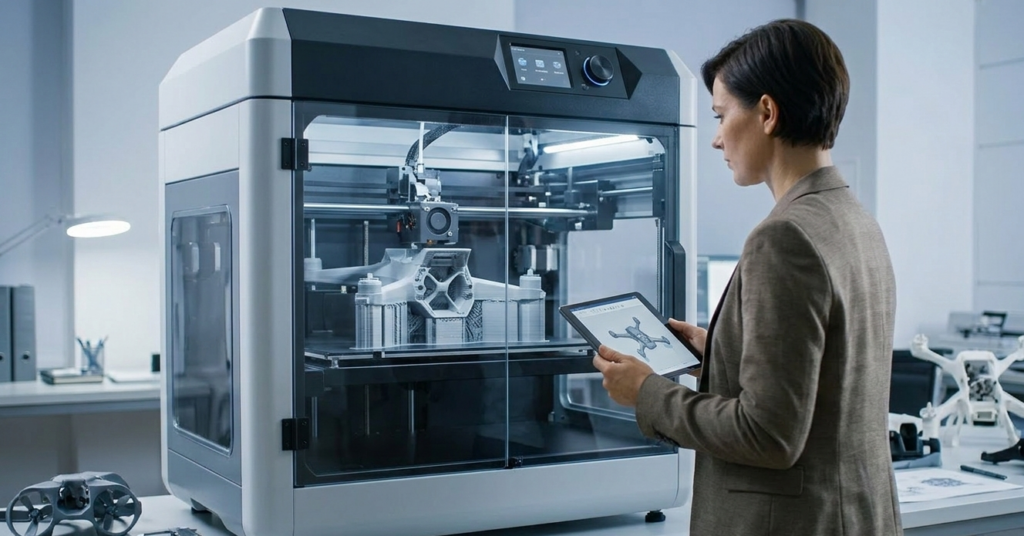
3D printing is moving outside of novelty trinkets to a useful production tool. One of the clearest use cases remains prototyping, particularly for development teams, and there are clear benefits to having access to a supplier that can deliver high-quality industry-level 3D print runs (in other words, not using a cheap domestic printer).
Specialty Inks and Premium Materials Push Corporate Print Upmarket
Print needs to do more than just show information on a piece of material. It can’t just be a physical equivalent of a graphic still on a computer screen. In 2026, buyers want runs that elevate the product upmarket, with premium, memorable prints that are worth keeping.
Your offers need to give consumers choice, finding a material and ink combination that feels unique, and often premium. With plain digital messaging now saturated, levelling up your print options helps companies stand out from the standard.
This is particularly relevant for things like presentation folders or even invitations. Think branding packs, annual reports, point-of-sale materials, and everything that tends to be a one-off, limited-run, and designed to impress investors or potential consumers.
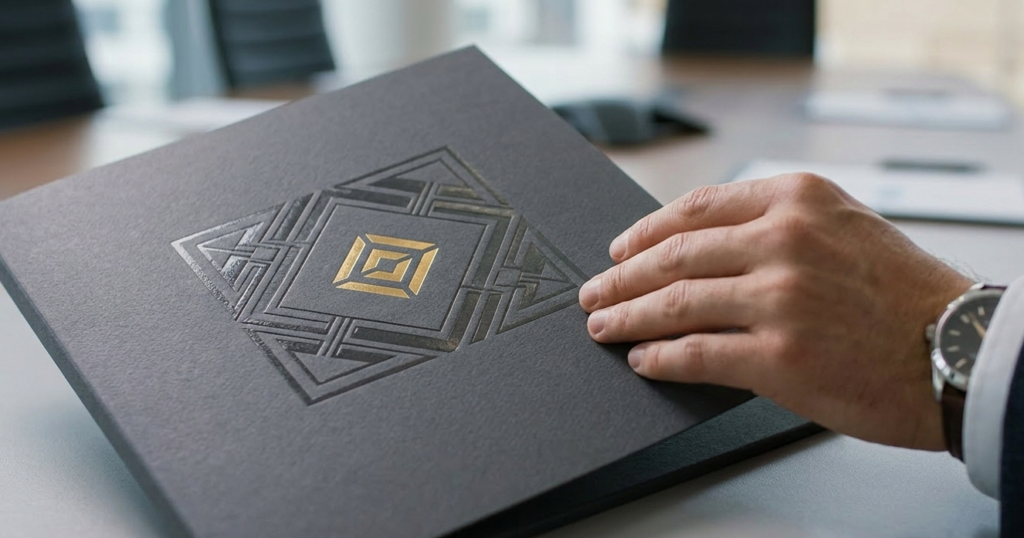
This reflects a wider industry trend to a more selective approach, rather than mass printing. Paper stock, thickness, texture, coating, and finish are all variables that need to be available for consumers, with each changing how printed material is perceived.
Print Works Alongside Digital, Not Against It
The old print-versus-digital debate is no longer relevant, at least not if you want to survive in the industry. In 2026, the stronger approach is to treat print as a core component of a holistic campaign in product delivery.
It’s not a separate channel that fights against digital ‘alternatives’, but instead supports and leverages its advantages. Our takeaway message: don’t fight against the current. There is still very much a place for the print industry, but the market doesn’t quite behave like it used to.
IMPORTANT NOTICE – Image credits: All visuals and images within the article created via generative AI tools (Chagpt – Gemini). Editorial prompt and concept by Alex Petrovic (March 2026).